

The short version
What Amazon account management actually covers
Amazon account management is the ongoing work of running a seller account so that it sells profitably: setting up and maintaining the catalogue, writing and optimising listings, managing inventory and fulfilment, handling account health and policy issues, and controlling the fees that come out of every order.
Amazon advertising is the paid layer on top, using Sponsored Products, Sponsored Brands, Sponsored Display and Amazon DSP to buy visibility inside the marketplace.
The two are usually sold separately and that is the root of most problems:
- Ads amplify whatever the listing already does
- A bad listing advertised harder just loses money faster
- The fix for a bad ACoS is very often not in the ad account at all
- At ScalEasy the same team owns both
Where the margin goes
Selling on Amazon is easy. Making money on Amazon is not.
The usual story goes like this. Sales are growing month on month, the dashboard looks healthy, and everyone is pleased. Then someone sits down with the settlement report and works out the actual margin per order after referral fee, closing fee, weight handling, storage, GST on all of it, ad spend and returns. On a good number of SKUs it is negative, and it has been for months.
Underneath that there are usually four specific problems:
- Products sitting in the wrong category, paying a referral fee several points higher than they should
- Listings with half the backend attribute fields empty, so they never surface for the searches that would convert
- Ad campaigns running on auto-targeting since launch, quietly paying for search terms that have never produced a sale
- Slow-moving inventory in FBA accumulating storage fees nobody has attributed back to the SKU causing them
None of these are visible on the sales graph. They only appear in the settlement report, which is where most sellers never look because it is genuinely unpleasant to read.
Indexed, with gross sales set to 100. Covers only the four avoidable losses above, not cost of goods or the base referral fee, so the endpoint is what those four leave rather than a full P&L. Illustrative of the pattern we see rather than one seller’s reported figures.
| Step | Points | Running total |
|---|---|---|
| Gross sales | 100 | 100 |
| Wrong category referral fee | -6 | 94 |
| Listings that never surface | -5 | 89 |
| Auto-targeting ad waste | -12 | 77 |
| Unattributed FBA storage | -4 | 73 |
| Actual margin | 73 | 73 |
The fee structure
The fees that decide whether a SKU is worth selling
Amazon charges in layers rather than as one commission. GST at 18% applies on top of all of them.
| Fee | What it is | Typical range |
|---|---|---|
| Referral fee | Percentage of selling price, set by category | 2% to 45%, varies widely by category |
| Closing fee | Flat fee per item, scales with price band | Reduced across bands in 2025 and 2026 |
| Weight handling | Charged when Amazon ships, by weight and distance | Applies to FBA and Easy Ship only |
| FBA pick and pack | Per unit, standard versus oversized | Around ₹14 standard, ₹26 oversized |
| FBA storage | Per cubic foot per month | Around ₹45 per cubic foot |
| GST | Applied on top of all Amazon fees | 18% |
Source: Amazon India fee schedule, August 2026. Fees change periodically, verify against Seller Central before relying on these figures.
The March 2026 change most sellers have not repriced around
On 16 March 2026 Amazon India expanded zero referral fees from products under ₹300 to products priced up to ₹1,000, across more than 1,800 categories including apparel, footwear, beauty, grocery, home decor, toys, kitchen, automotive and pet products. For a brand selling in that band this is a material margin change, and most sellers have not adjusted pricing, ad bids or SKU strategy to take advantage of it. That is the first thing we check in an audit.
Source: Amazon.in seller fee update, effective 16 March 2026.
What’s included
Two halves of the same job
Account and catalogue
Account setup and Brand Registry
Seller Central registration, GST and bank verification, category approvals, and Brand Registry, which unlocks most of the useful advertising and content tools.
Listing creation and optimisation
Titles, bullets, backend search terms and every applicable attribute field. Empty attribute fields are the most common reason a product never appears in the searches it should.
Catalogue and category correction
Fixing miscategorised products, variation families that are split when they should be joined, and duplicate ASINs competing with each other.
A+ Content and Brand Store
Enhanced product pages and a storefront that gives Sponsored Brands campaigns somewhere worth sending traffic.
Fulfilment strategy
FBA, Easy Ship or self-ship, decided per SKU on the actual economics rather than as a blanket policy.
Account health and compliance
Policy warnings, listing suppressions, performance notifications and the appeals process. Ignored, these end in suspension.
Advertising
Campaign structure and launch
Sponsored Products first, then Sponsored Brands and Display once Brand Registry is live, structured so you can tell which SKU is making money.
Keyword and search term management
Regular search term reports, promoting what converts into exact-match campaigns and adding negatives for what does not.
Bid and budget management
Bids set against target ACoS by SKU, and budget shifted toward the products that actually have margin rather than the ones with the highest revenue.
DSP and upper funnel
For brands with the budget for it, programmatic reach across Amazon properties and beyond, aimed at audiences before they search.
Buying visibility
Four ways to buy visibility, and when each is worth it
| Ad type | What it does | Brand Registry needed | Pricing |
|---|---|---|---|
| Sponsored Products | Promotes a single product in search results and on detail pages | No | Cost per click |
| Sponsored Brands | Promotes your brand, Store or a group of products | Yes | Cost per click |
| Sponsored Display | Retargeting and competitor targeting, on and off Amazon | Yes | CPC or CPM |
| Amazon DSP | Programmatic display, video and streaming across Amazon and third-party inventory | Yes | Cost per thousand impressions |
Almost every account should start with Sponsored Products, because it needs no Brand Registry, targets people already searching, and produces the search term data everything else is built on.
Source: Amazon Ads documentation, August 2026. Verify current ad formats before publishing.
What good looks like
What good looks like on Amazon India
Two numbers matter and most sellers only watch one. ACoS is ad spend against ad-attributed sales. TACoS is ad spend against total sales including organic, which tells you whether the business is becoming less dependent on ads over time.
| Metric | Typical range on Amazon India |
|---|---|
| Cost per click | ₹6 to ₹28 depending on ad type and category |
| Healthy TACoS | 8% to 15% |
| ACoS, electronics | Around 8% to 14% |
| ACoS, beauty | Around 18% to 25% |
| ACoS, apparel | Around 22% to 30% |
| Time to profitable steady state | Usually 60 to 90 days from launch |
Source: agency-published benchmark data, August 2026. Approximate, and best replaced with your own account data over time.
What changed on Amazon
Amazon has its own AI shopping assistant, and it is live in India
Rufus is Amazon’s conversational AI shopping assistant, now available in India. Shoppers ask it questions in normal language, compare products through it, and act on what it recommends. It was renamed Alexa for Shopping in the US in May 2026, and the recommendation logic behind it is unchanged.
It matters because it reads listings differently. It is built on a knowledge graph that evaluates context rather than matching keywords, drawing on your structured attribute fields, bullets and reviews to understand what a product is for and who it suits.
This is not that keyword optimisation is dead. It is that the two systems now sit on top of each other. A well-built listing with full attribute coverage and genuine review depth performs in both. A thin listing with a stuffed title and empty attribute fields performs in neither.
Source: Amazon Rufus availability, verified August 2026. Amazon renames features frequently, re-check before publishing.
Scope
Nine things we handle, and when each one matters
New seller account setup
Registration, verification, category approvals and first listings.
Brand Registry and brand protection
Enrolment, plus handling hijackers and unauthorised sellers on your listings.
Listing and catalogue optimisation
Titles, bullets, backend terms, attributes and product imagery. The highest-return work on most existing accounts.
A+ Content and Brand Store
Enhanced detail pages and a storefront built to convert Sponsored Brands traffic.
Amazon Ads management
Sponsored Products, Brands and Display, managed against target ACoS by SKU.
Amazon DSP
Programmatic and upper-funnel campaigns for brands with the budget to justify them.
Fee and profitability audit
Category correction, fee analysis and per-SKU margin after all costs.
Inventory and FBA strategy
Replenishment planning, storage cost control, and which SKUs belong in FBA at all.
Account health and reinstatement
Policy compliance, listing suppressions, and appeals when something goes wrong.
Who we work with
Categories where we know where the margin hides
High competition, high ACoS, and heavy reliance on review depth and A+ Content. Also one of the categories affected by the 2026 fee reduction, which changes what is viable under ₹1,000.
The highest return rates on the platform, which means an ACoS that looks acceptable can still be losing money once returns are counted. We model on delivered revenue rather than orders placed.
Bulky items where weight handling and FBA storage decide profitability more than the referral fee does. Fulfilment strategy per SKU matters more here than anywhere.
Compliance-heavy categories where listing suppressions and category approvals cause more lost revenue than competition does.
Lower ACoS benchmarks but thinner margins, so small fee and bid inefficiencies compound quickly.
Why work with us
We report profit, not GMV
One team for the account and the ads
Most brands hire a listing agency and a PPC agency and end up refereeing between them. When ACoS is high, the cause is often the listing, not the bid, and a single team can just fix it.
We start with the settlement report
Before touching a campaign we work out what each SKU actually earns after every fee, ad cost and return. Sometimes the honest answer is to stop selling a product rather than advertise it harder.
We market off Amazon too
We run Google and Meta campaigns and build the websites behind them, so we can tell you when Amazon is the wrong channel for a product, or when your own D2C site would keep more of the margin.
Sixteen years, 350+ projects
Long enough to have seen how the same mistakes repeat across categories, which is what makes an audit fast.
Where we are
Built in Haldwani, selling nationally
We are based in Haldwani, Uttarakhand. For most of the last sixteen years the work ran out of Delhi NCR, and in 2024 we moved operations here and kept every client through the move.
Amazon is a national marketplace, so where the agency sits matters less here than on any other service we offer. What it does mean is that manufacturers and brands across Uttarakhand, in Haldwani, Rudrapur, Kathgodam, Sitarganj and the industrial belt around them, can get this handled locally instead of through an agency in Delhi or Bangalore that has never visited the warehouse.
There is a real opportunity in this region specifically. A lot of manufacturing here sells entirely through distributors and has never listed directly. Amazon removes the distributor margin and puts the brand in front of the whole country, and the barrier is almost never the product. It is that nobody in the building knows how Seller Central works.

How we work
Four stages, starting with the numbers
Audit
Settlement reports, fee analysis, category check, listing quality review, ad account structure and search term waste. You get a per-SKU picture of what each product actually earns.
Fix the foundation
Category corrections, listing and attribute completion, A+ Content, Brand Registry if it is missing, and fulfilment decisions per SKU. Advertising a broken listing is how money disappears, so this comes first.
Advertising
Sponsored Products with tight structure and a target ACoS per SKU, search term reports read weekly at first, then Sponsored Brands and Display once the foundation supports them.
Scale and defend
Growing the products that have margin, monitoring account health, adjusting to fee and policy changes, and watching TACoS to confirm organic sales are growing rather than being bought.
| Stage | Timing |
|---|---|
| Audit | Weeks 1 to 2 |
| Fix the foundation | Weeks 3 to 6 |
| Advertising | Weeks 7 to 12 |
| Scale and defend | From week 10, ongoing. Continuous cycle. |
Three times the profit per SKU by day 90, with the turn at day 30. Nothing improves while the catalogue is wrong, which is why the first month looks like no progress. Advertising only starts paying once it is pointed at listings that convert. Indexed rather than absolute, because this is the shape of a typical account rather than one seller’s numbers.
| Day | Profit per SKU index | Phase |
|---|---|---|
| Day 1 | 60 | Before fixes |
| Day 10 | 58 | Before fixes |
| Day 18 | 56 | Before fixes |
| Day 25 | 54 | Before fixes |
| Day 30 | 53 | After fixes |
| Day 36 | 95 | After fixes |
| Day 45 | 112 | After fixes |
| Day 60 | 133 | After fixes |
| Day 75 | 157 | After fixes |
| Day 90 | 180 | After fixes |
Testimonials
Proof,
Not Promises.

ScalEasy showed up exactly when we needed them. We'd come out of some rough months with our last agency, poor communication, zero business understanding, just noise. ScalEasy is the opposite. They get how we think, they get the market, and somehow they've made working together genuinely fun.
ScalEasy showed up exactly when we needed them. We'd come out of some rough months with our last agency, poor communication, zero business understanding, just noise. ScalEasy is the opposite. They get how we think, they get the market, and somehow they've made working together genuinely fun.
Fit
Worth checking before you enquire
Probably a good fit if
- You are selling on Amazon and cannot say confidently which SKUs are profitable
- Your ACoS has been climbing and nobody has explained why
- You manufacture or own a brand and have never listed directly
- You have listings that were set up once and never revisited
- You want one team handling the listings and the ads rather than two vendors blaming each other
Probably not
- You are reselling other brands' products with no exclusivity. Price competition will beat any optimisation we do.
- Your margin after all Amazon fees is under about 15%. There is not enough room to work with, and we will tell you that in the audit.
- You want ads switched on this week. The listings come first or the spend is wasted.
- You want guaranteed revenue. Nobody controls Amazon's algorithm, your competitors' pricing, or the fee schedule.
Deliverables
What lands in your hands
- A full account and fee audit with per-SKU profitability in the first month, yours to keep
- Listings rewritten and attribute fields completed across the catalogue
- Category corrections applied where products are in the wrong fee bracket
- A+ Content and Brand Store built, where Brand Registry allows
- Ad campaigns structured with a target ACoS set per SKU
- Weekly search term management and negative keyword maintenance
- A monthly report on revenue, ACoS, TACoS and profit per order, plus a call to go through it
- Account health monitoring, with policy issues handled before they escalate
- One named point of contact who knows the account
Investment
What this costs with us
and fee auditfrom ₹25,000
and catalogue launchfrom ₹50,000 one-time
no advertisingfrom ₹30,000 / month
management onlyfrom ₹30,000 / month
advertising managementfrom ₹50,000 / month
monthly ad spend10 to 12% of spend
Ad spend goes to Amazon and never touches us. What moves the fee: catalogue size, how many categories you sell in, whether Brand Registry and A+ Content need building from scratch, and how much repair the existing account needs.
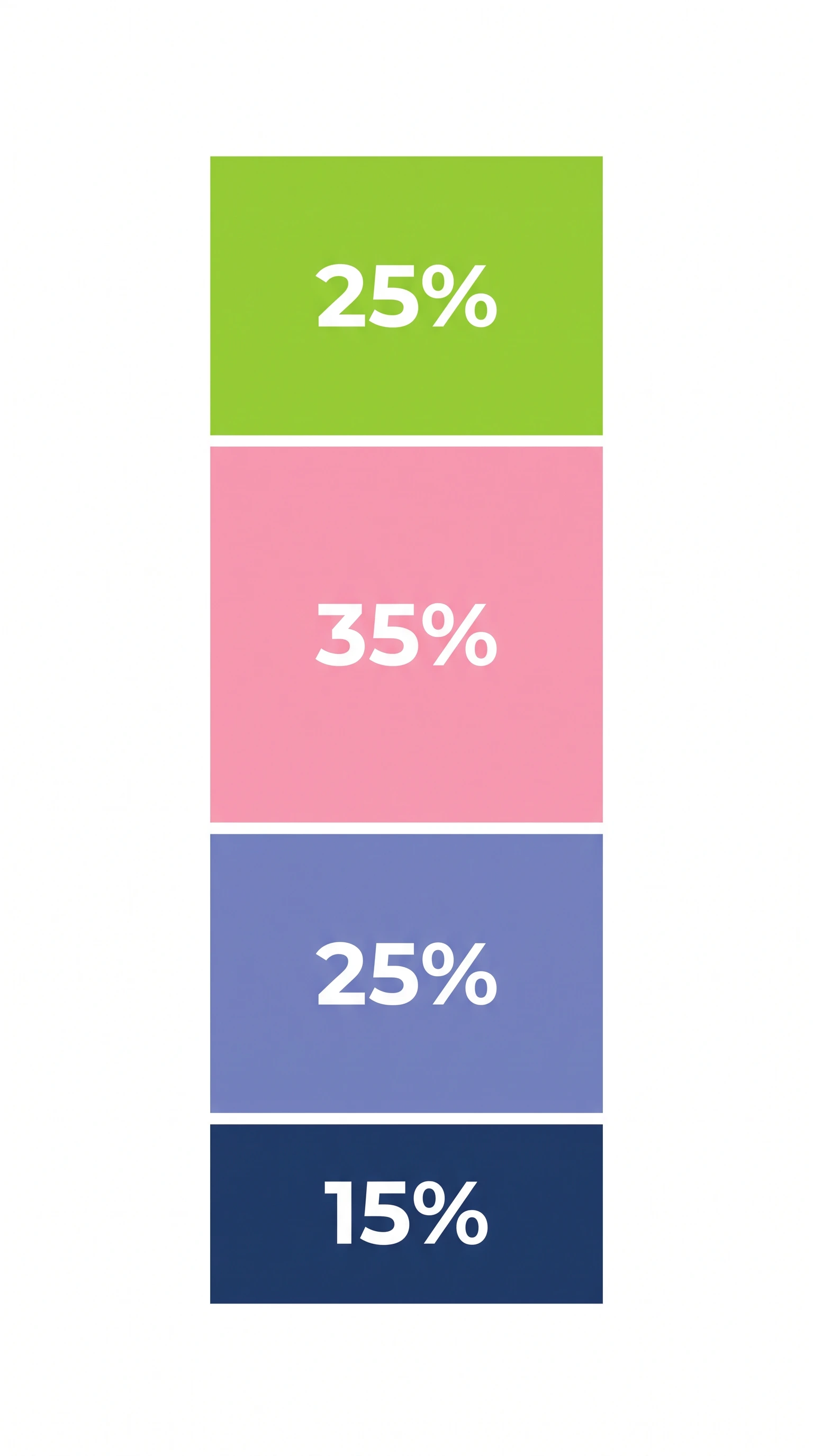
- 25%
- Listing and catalogue work
- 35%
- Advertising management
- 25%
- Account health and compliance
- 15%
- Reporting and strategy
FAQ